What the Clip Remembers — Music Channel Cover System
What the Clip Remembers
A cover system for my YouTube music channel, made in September 2026
Overview
Fifteen covers for my own YouTube channel: music videos, short music journals, and an old series of how-to clips. Before, every video showed a random frame. I wanted a family of covers that reads at thumbnail size and never turns into a template.
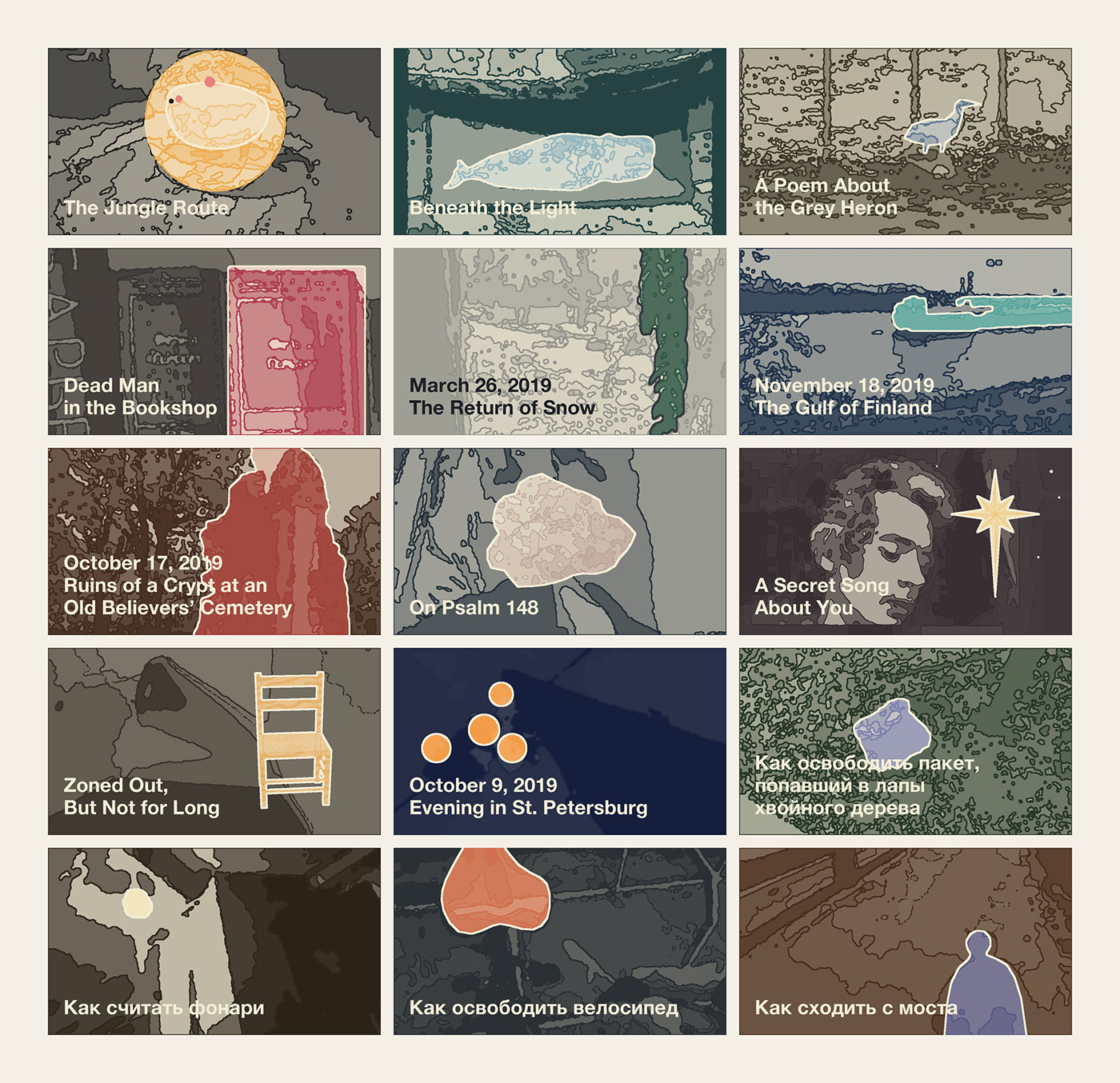
All fifteen covers, each with one object from its clip in its own colour
Exploration
I went through about 150 variants in seven directions before one stayed.

Neo-primitivism: flat colour, folk-print borders, rayonist beams

A collage of the route through the clip

A strict grid shared by every clip

Generative: slit-scan, spectrogram, the waveform drawing itself

Bauhaus layouts with Matyushin-style colour triads

Imitating materials: slide, fresco, museum light, pencil
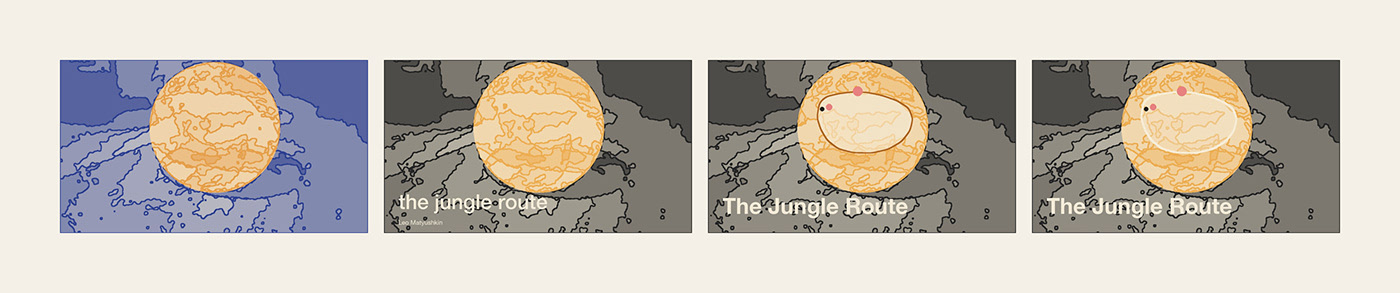
The contour field — the direction that stayed
The turning point
What decided it was size. A thumbnail spends most of its life at 168 × 94 px in a playlist. Side by side at that size, the grid turned into mosaic and the covers blurred into one another; a single image stayed readable.
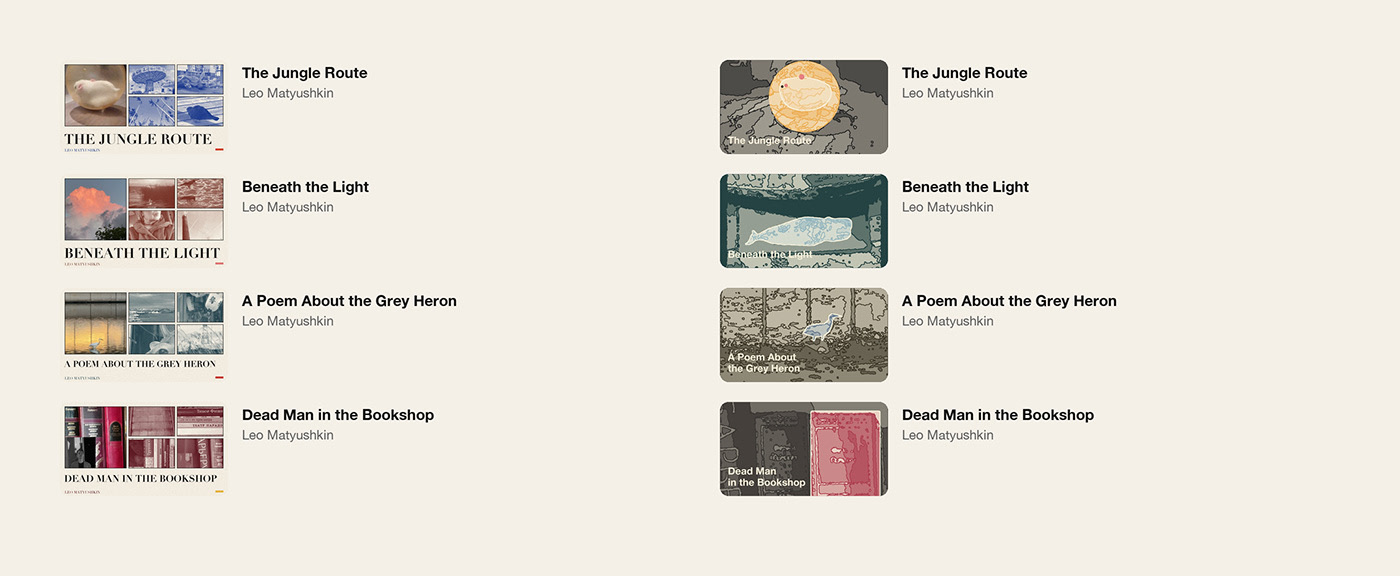
The same four songs at real playlist size: the grid system (left) and one hero per frame (right)
Method
The method is simple. One frame from the clip is smoothed and reduced to four or five flat tones, with ink lines on the tone borders. The field takes a dark neutral from the clip’s own palette. One object — the hero — keeps its own colour and a thin light edge.
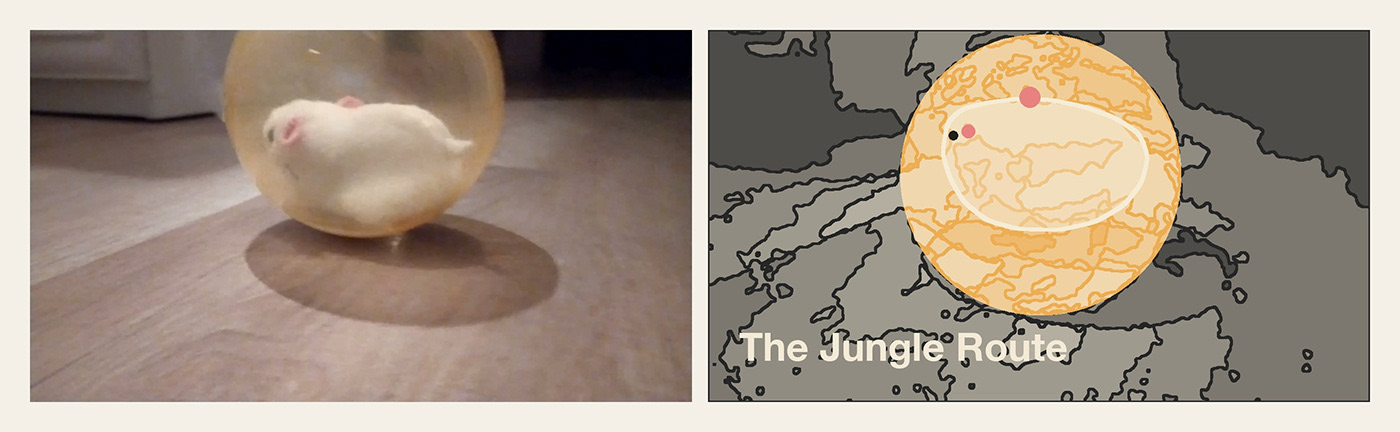
The Jungle Route: a hamster ball
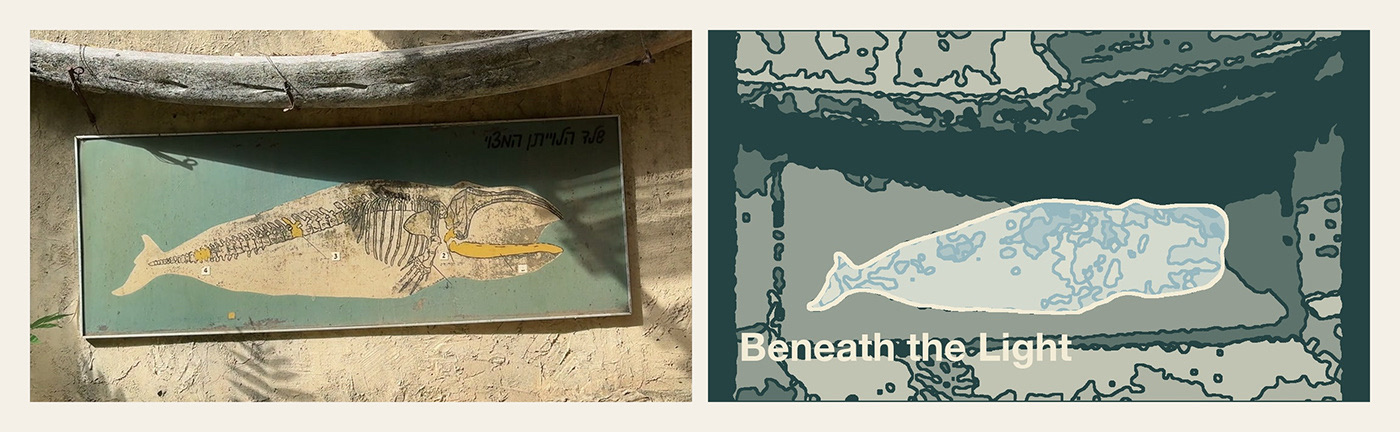
Beneath the Light: a whale on a wall
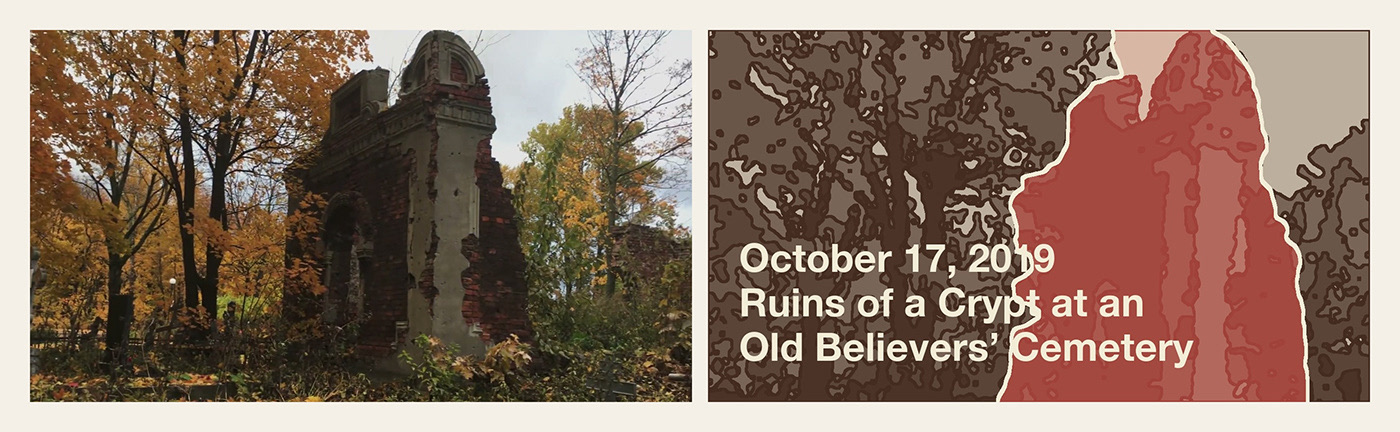
Music journal: the ruin of a crypt at an Old Believers’ cemetery

Music journal: a ship in the Gulf of Finland
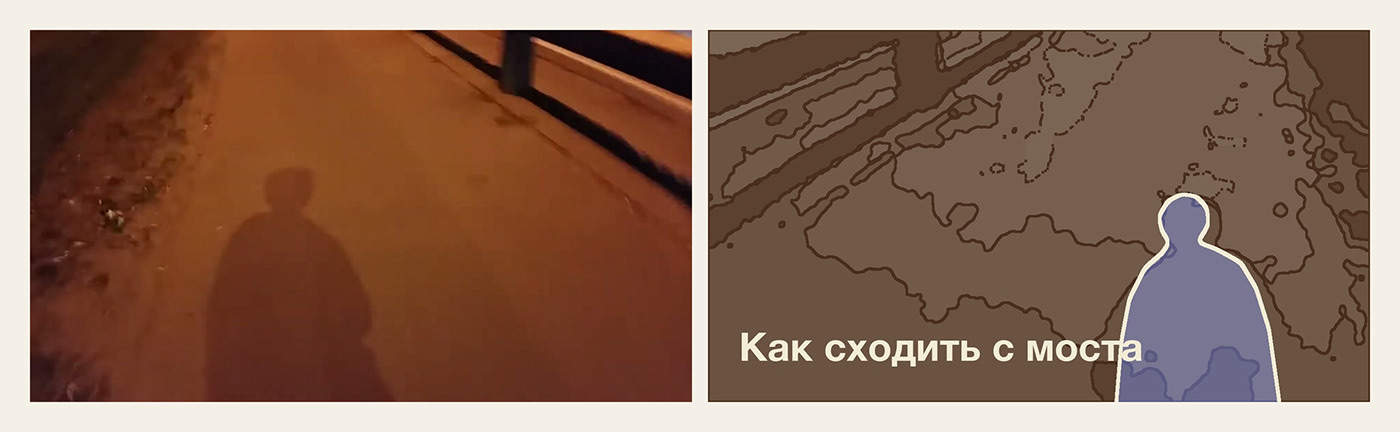
How-to series: my own shadow on a bridge
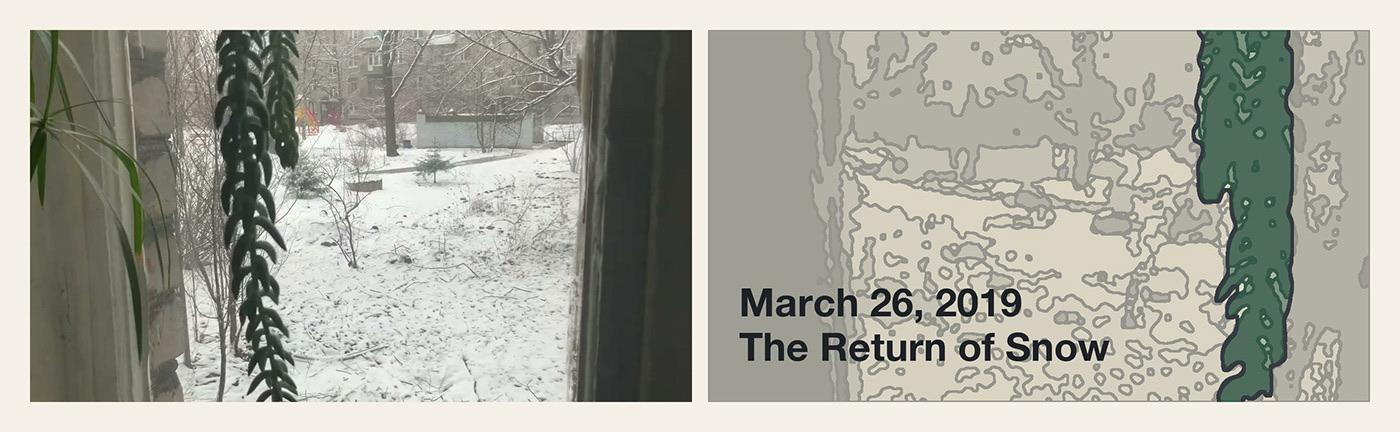
Music journal: the return of snow — on a light field the title turns dark
Cutting the hero
The hero has to be cut exactly. Automatic selection often takes a neighbour along — here a sunlit patch of the wall had the whale’s colour. Every mask is checked on its own; small or thin heroes are traced by hand.
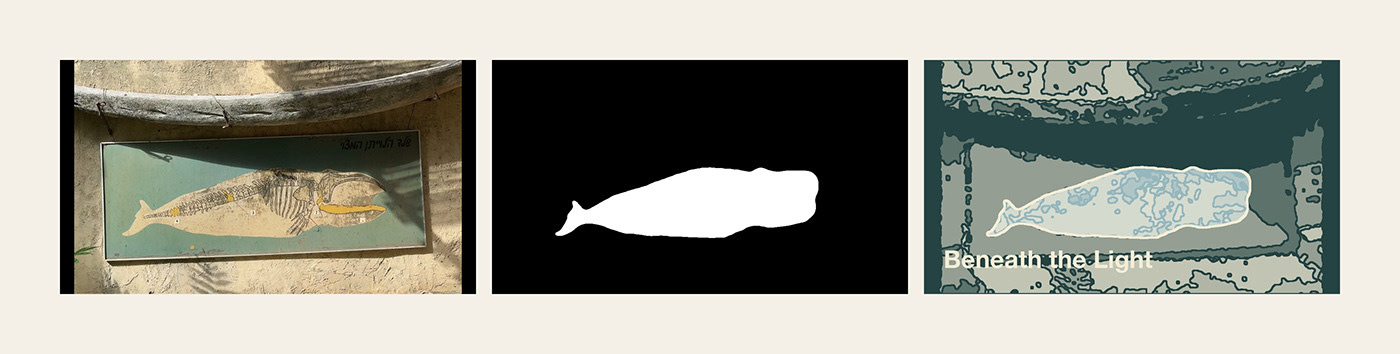
Frame, hero mask, cover
When the clip is only a face
Three songs are sung straight to camera, so the clip has no object. There the hero comes from the lyrics, drawn as a real, textured object.
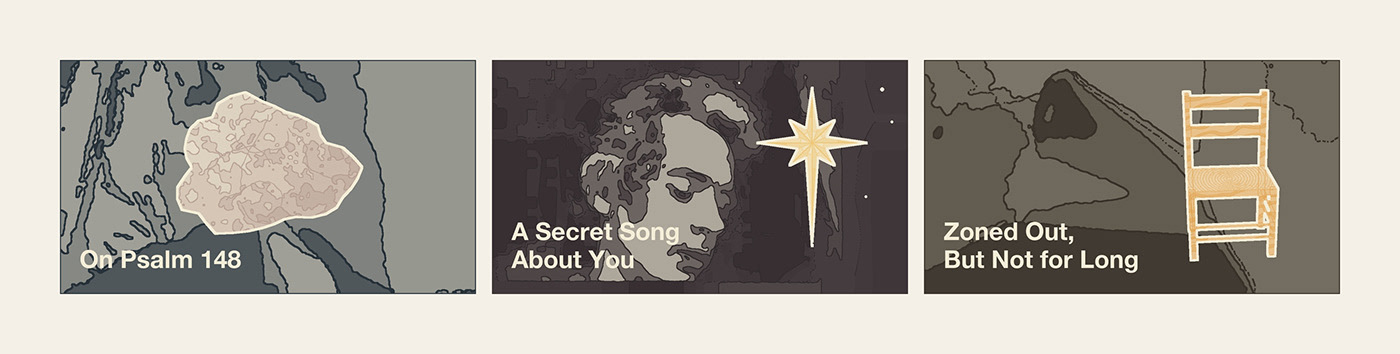
A stone rolled over faith, a star “to the very stars”, the chair where the singer sits “without feelings”
Shorts
Shorts get their own vertical covers. The Shorts shelf crops them to about 2 : 3, so the title and the hero stay inside that band.
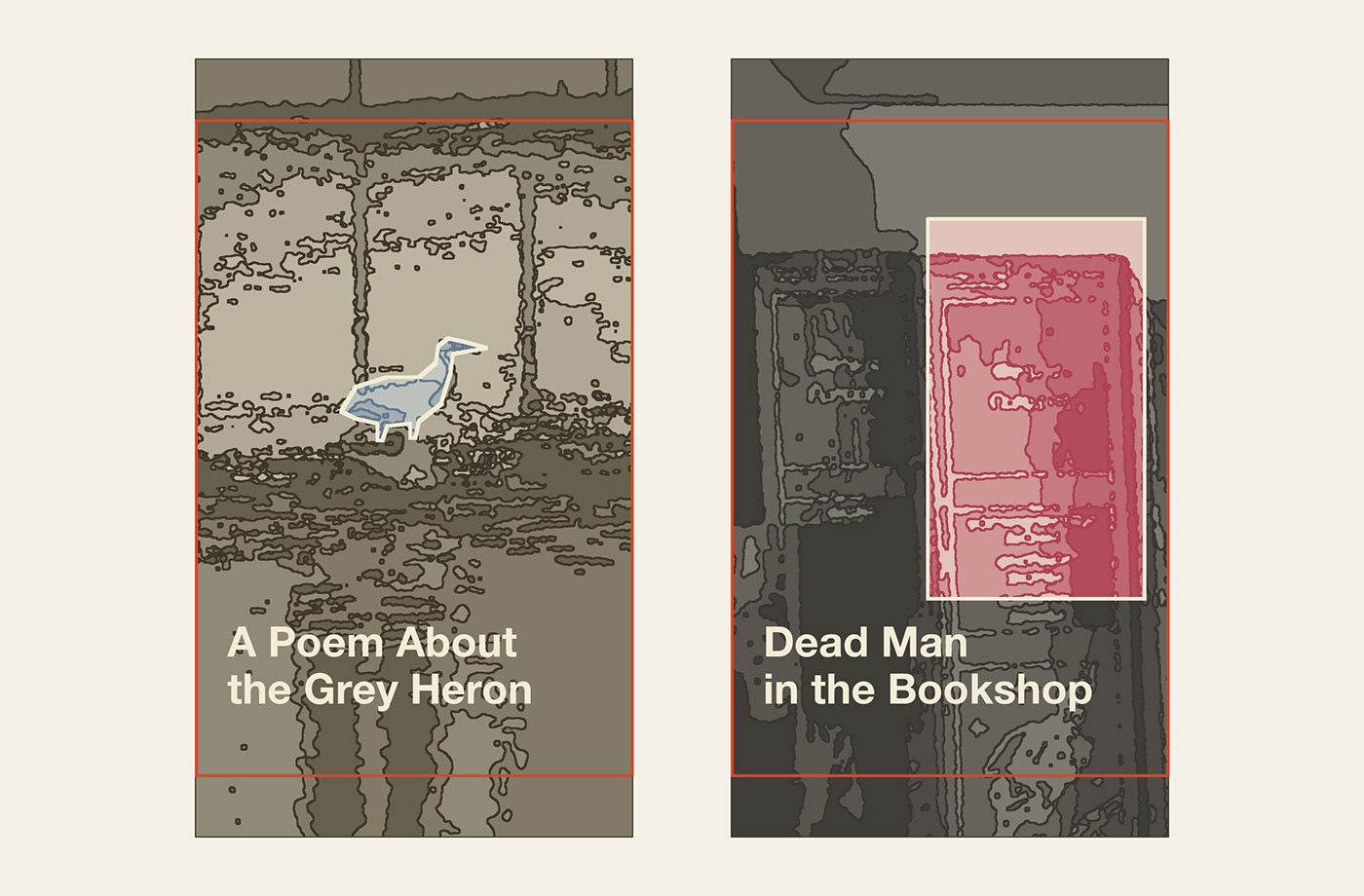
The red frame is what the Shorts shelf shows
On the platforms
And this is how they live on the platforms.
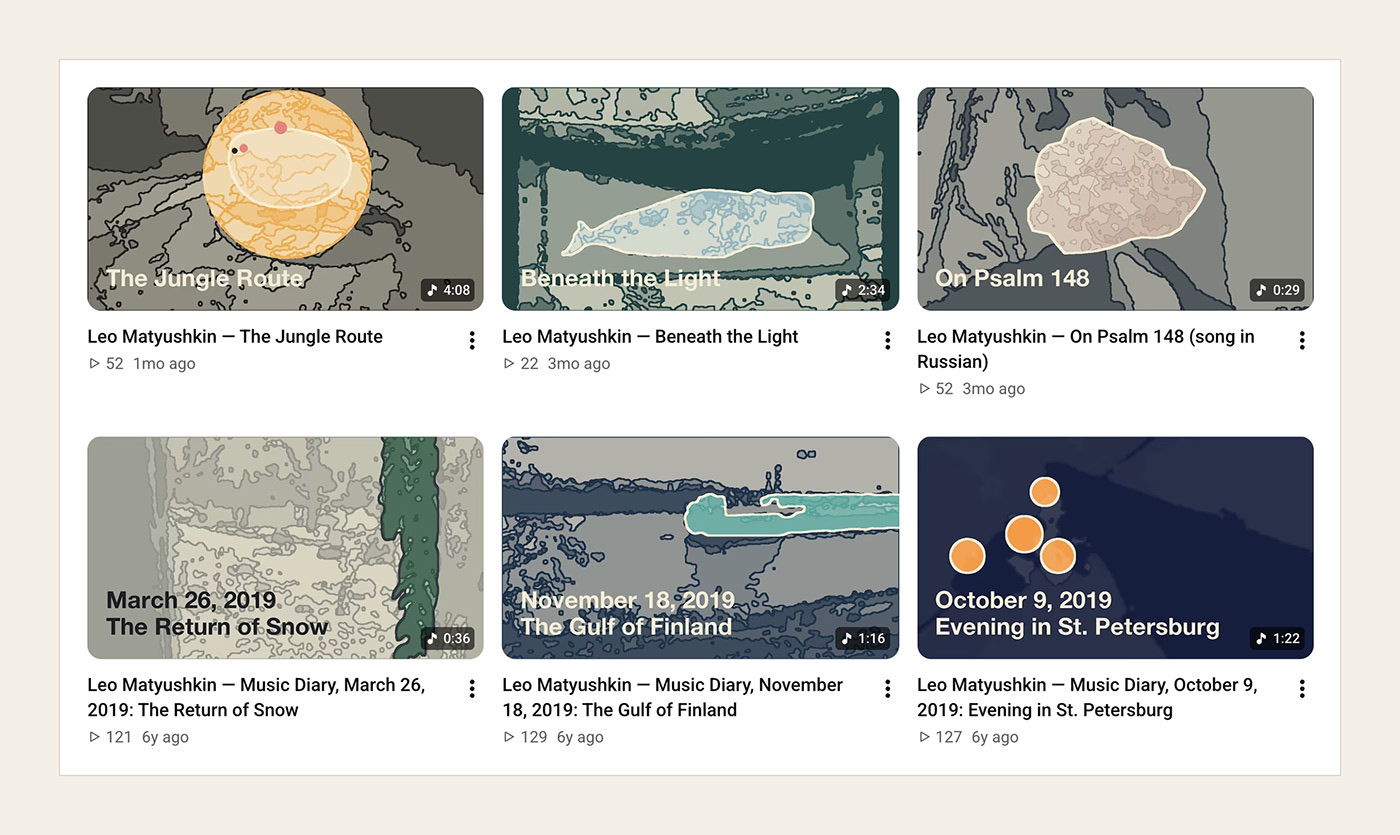
The channel’s video grid
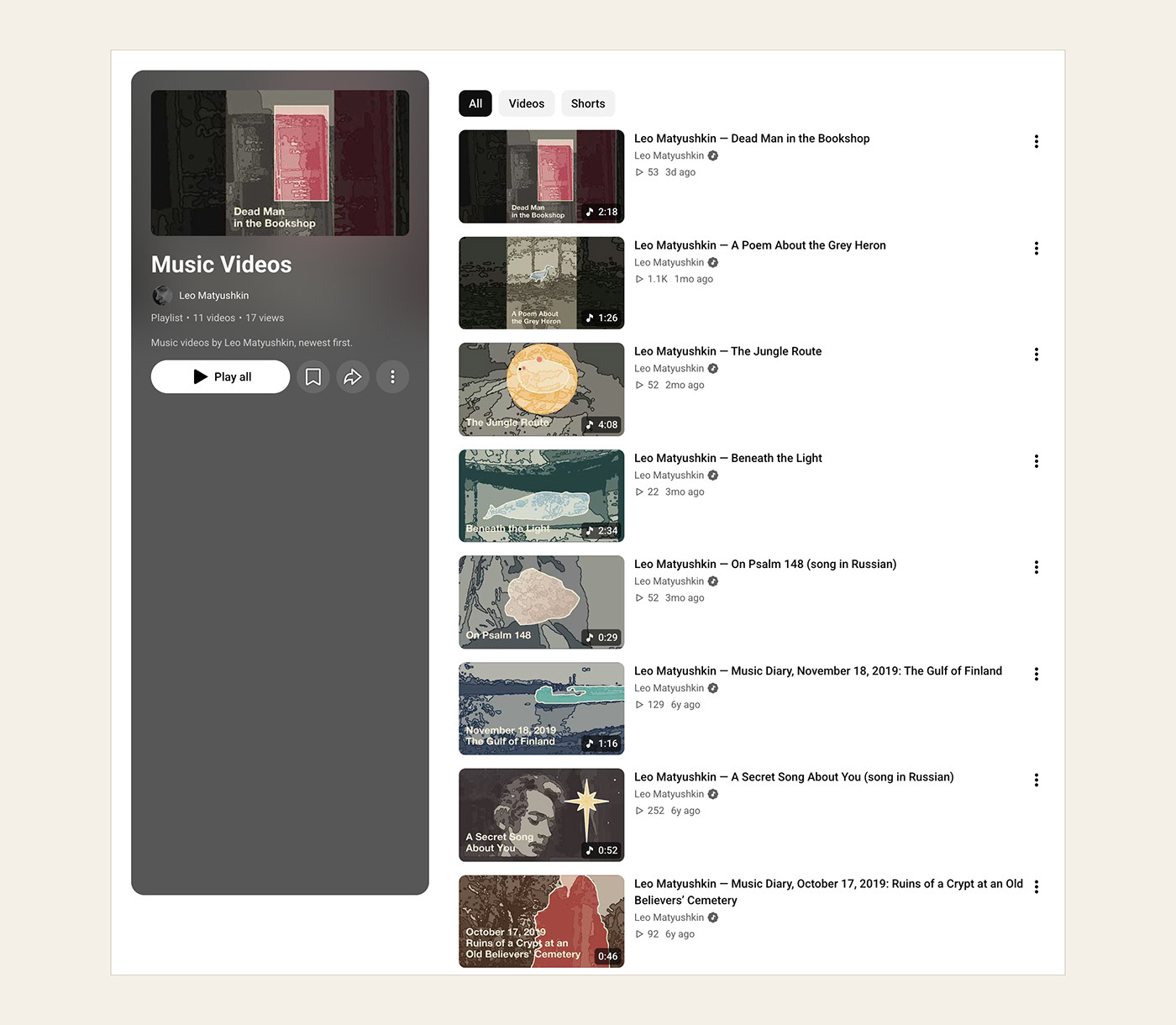
The Music Videos playlist
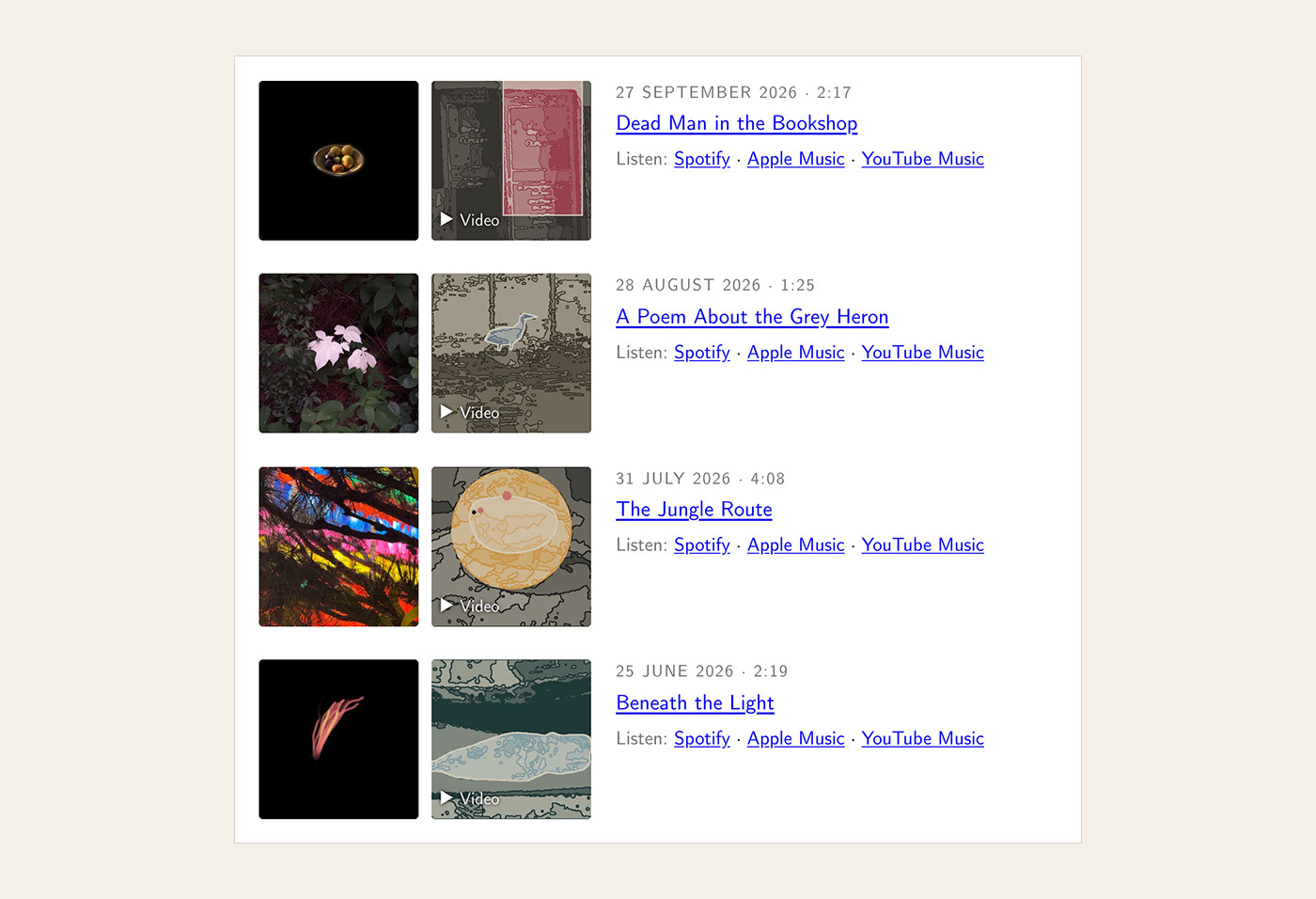
Releases on my site: the single’s artwork next to the clip
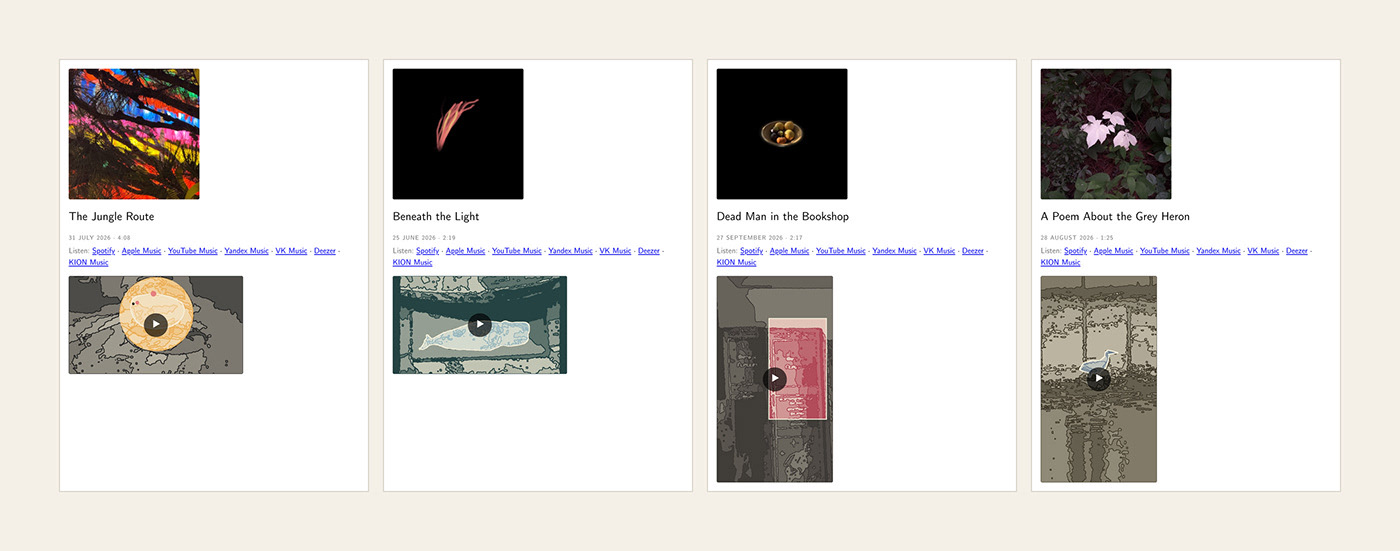
Release pages on the site
Rules
Rules I kept: one hero you can name after watching; its colour comes from the clip, never from a fixed palette; neighbouring covers differ in the hero’s shape and place; one typeface (Helvetica Neue Bold), one size, bottom left, no artist name; check the mask alone, then the cover at 168 × 94.
What’s next
The system keeps working: every new video gets its cover by the same rules. The tool and the rules are open on GitHub.